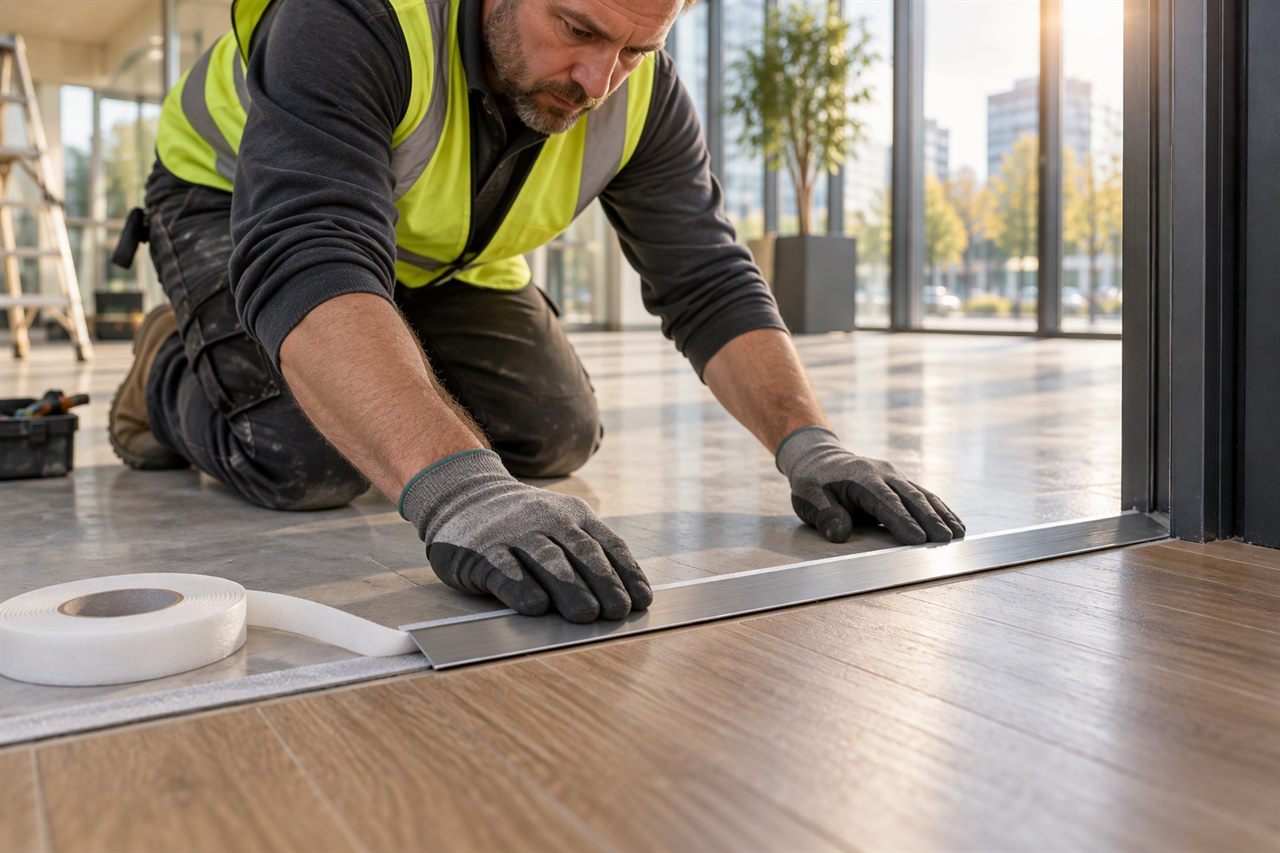
Construction & Building
Window glazing, panel bonding, flooring, HVAC and masking tapes for construction.
Fixing mirrors and glass panels to a wall, a frame or a piece of furniture, where the surface behind the glass can be plaster, painted board, tile, aluminium or plastic and the bond has to carry the weight for years.
A mirror is a heavy, fragile panel bonded to a surface nobody tested. The backing paint, the wall and the frame are three different materials, and the bond usually fails slowly: a corner that creeps, a panel that shifts after a season of humidity, or adhesive that becomes visible through the glass. Once a mirror comes down it takes the surface with it, so the fixing decision is made under a load that cannot be quietly repaired.
Surface energy, porosity and dust decide the tape more than the weight does. We ask what the mirror goes onto, whether it is painted or primed, and whether the backing coating is compatible with a pressure-sensitive adhesive.
A foam construction carries through thickness and creep resistance; a thin acrylic carries through contact area. The tape pattern is sized against the panel, its weight and whatever edge support exists.
A bonded mirror that goes on crooked stays crooked. We review whether the installation needs a positioning window, which is usually a balance of initial tack and release, before a grade is chosen.
Bathrooms, lift lobbies and fitted furniture move with the seasons. The construction is selected for the environment it has to live in, and the joint is designed so the glass does not carry the movement.
| Mirror application | Typical construction | Product family |
|---|---|---|
| Wall mirror in a wet room | Acrylic foam tape, perimeter and centre | Foam tape |
| Furniture and cabinet mirrors | PE foam or acrylic double-sided tape | Foam tape |
| Decorative glass on metal or plastic | Transfer tape or thin PET double-sided tape | Double-sided tape |
| Bevelled and shaped glass | Die-cut tape pads to the outline | Die-cut parts |
| Holding before a mechanical fix | Removable mounting tape | Specialty tape |
Constructions are starting points. The final choice depends on the substrate, process, test standard and volume.
Window glazing, panel bonding, flooring, HVAC and masking tapes for construction.
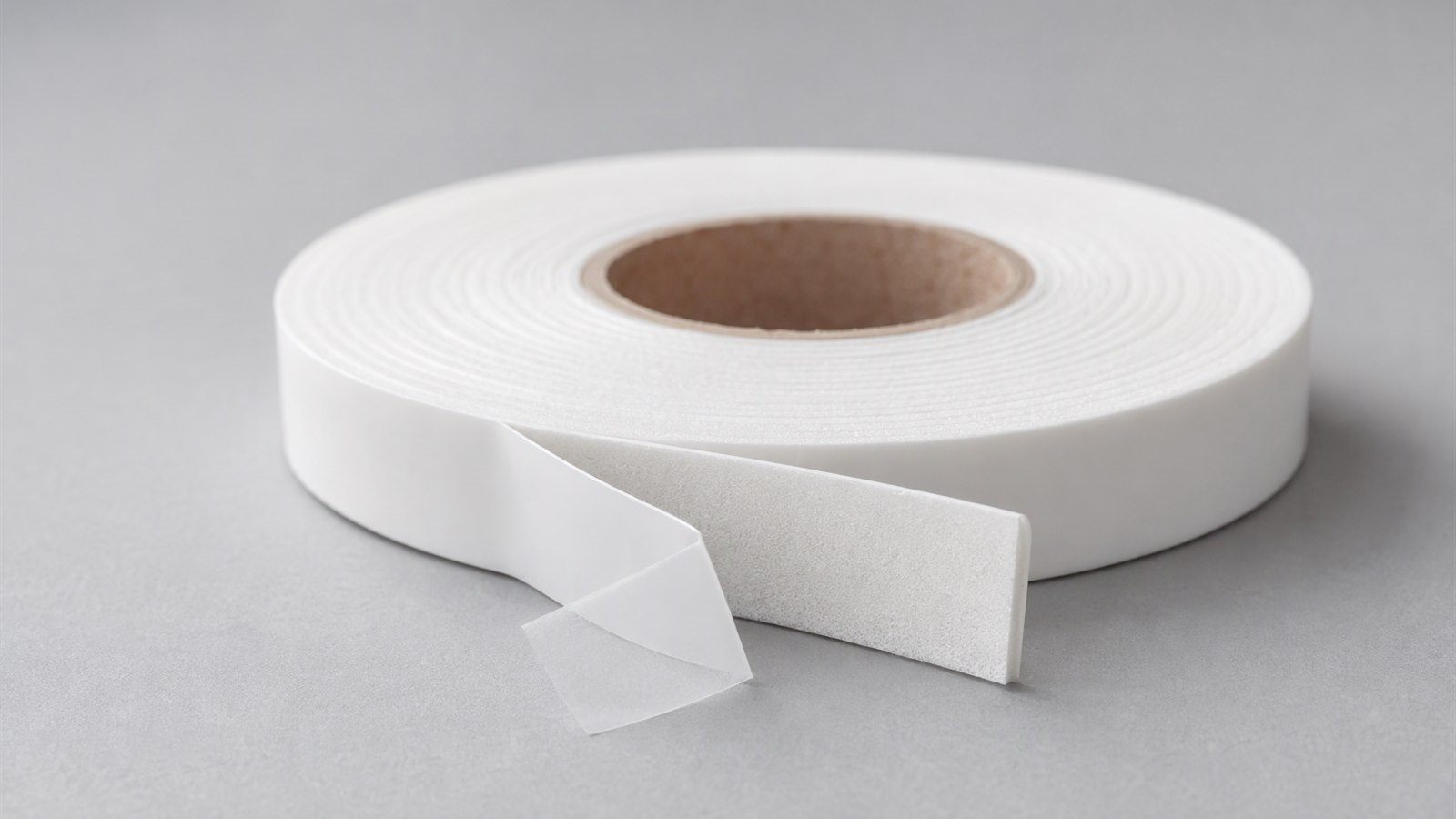
Acrylic foam, PE foam and VHB-style tapes for exterior trim, panels, glazing and appliance bonding.
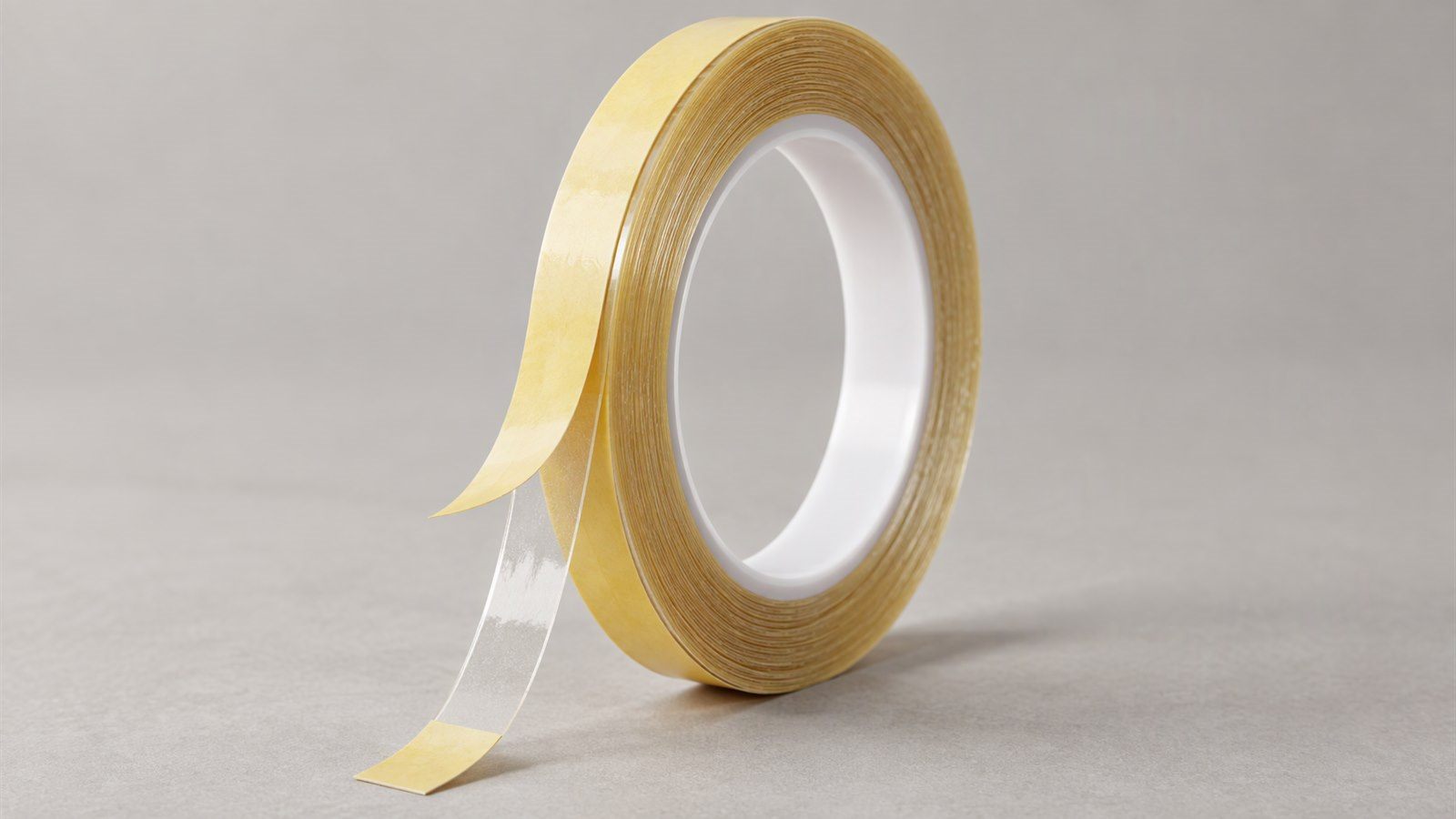
PET, non-woven, transfer and tissue tapes for electronics, automotive and appliance assembly.
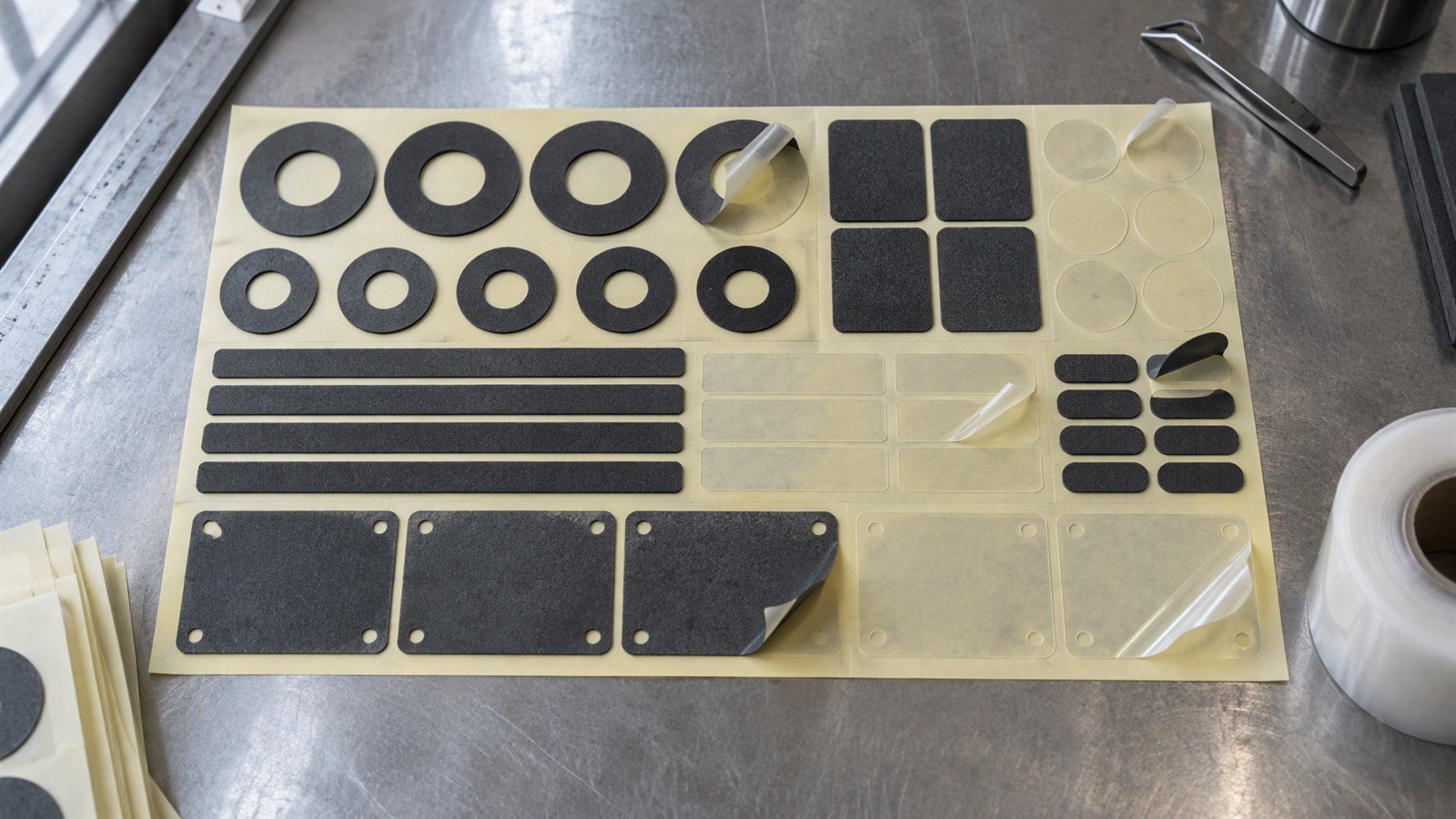
Custom adhesive parts from drawing to ready-to-install: flat-bed, rotary, laser cutting and kitting.
Easy-release, heat-reactive, low-VOC, medical IVD and laser-through glass tapes for demanding applications.
A photo, the substrate and the test you need are enough for a first review.