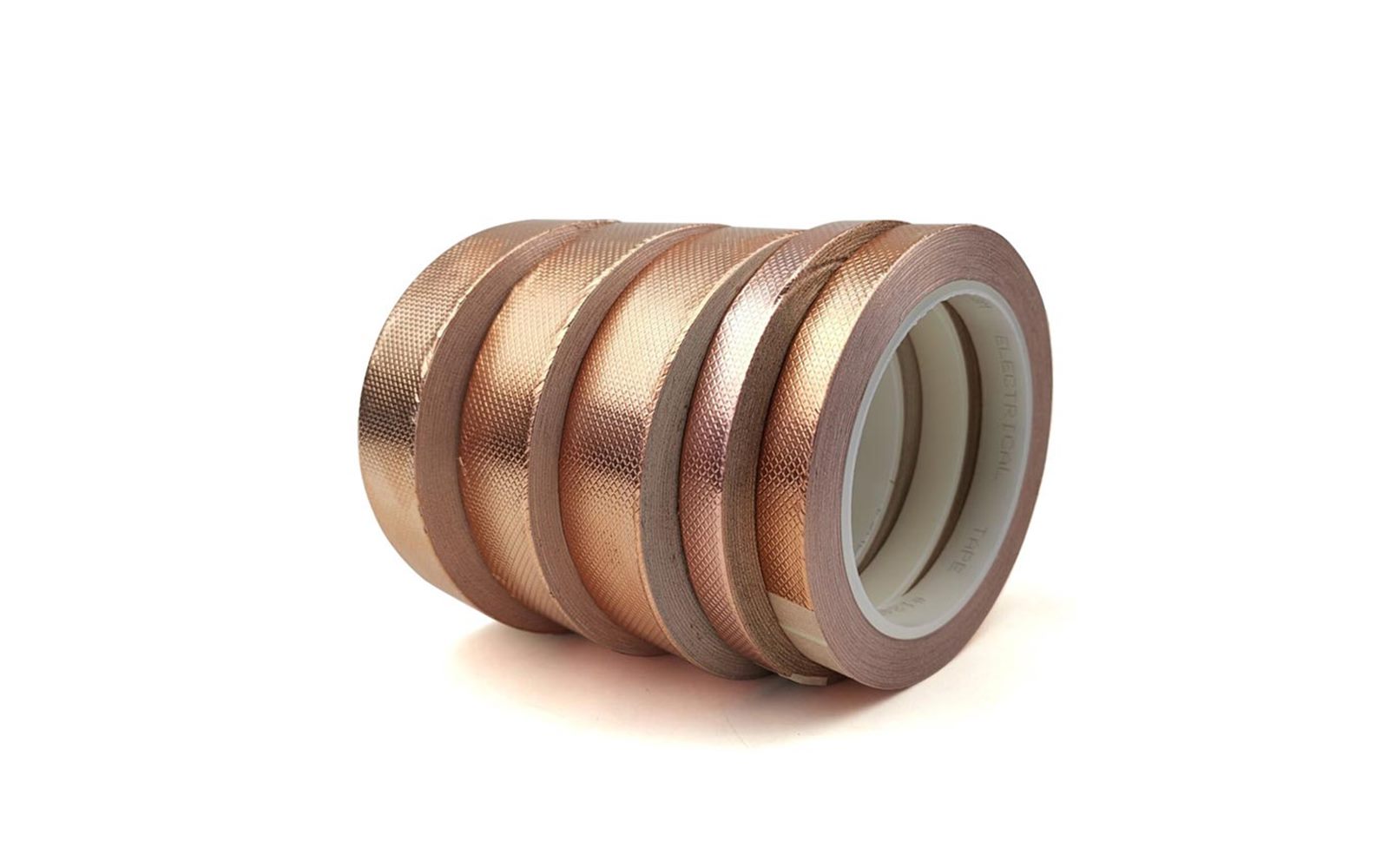
Specialty Tape
Easy-release, heat-reactive, low-VOC, medical IVD and laser-through glass tapes for demanding applications.
View productHeat-activated film, anisotropic conductive hotmelt film, transfer and protective constructions for chip embedding, antenna connection, inlay assembly and card lamination — cut and delivered in the format your card line feeds.
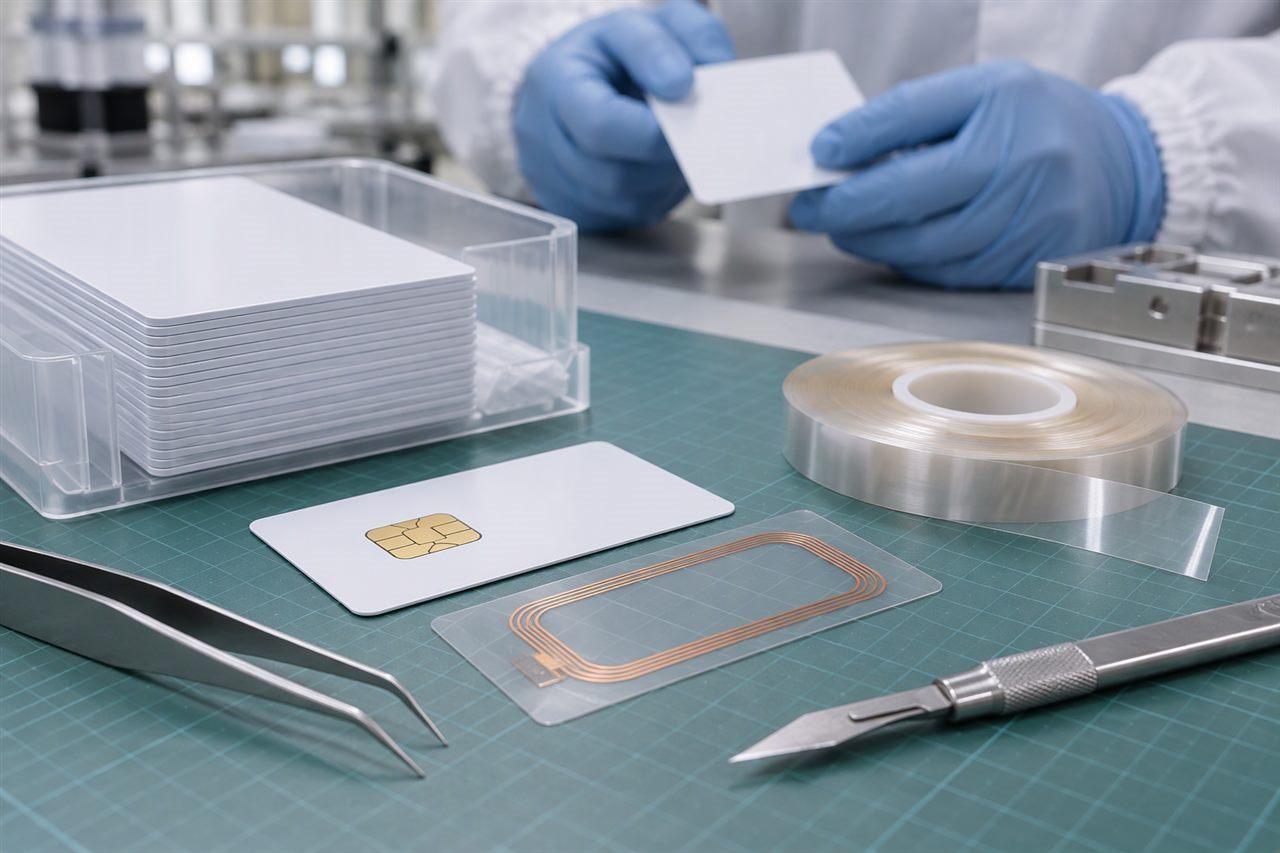
Chip and antenna contacts have to connect through the right combination of temperature, pressure and dwell.
A card module adds height; the film has to stay thin and even across the whole card.
The bond is tested by the card lamination press, not by the bench sample.
Card producers run millions of pieces, so variation shows up as failed cards at personalisation.
Print works and issuers expect documentation per batch before a design is released.
| Application | Typical construction | Why |
|---|---|---|
| Contact module chip embedding | Heat-activated film (HAF) | Activates under the module without soldering |
| Antenna connection, contactless cards | Anisotropic conductive hotmelt film (ACF) | Conductive in one axis, insulating in the other |
| Module and inlay pre-fixing | Transfer tape / PET double-sided tape | Positions the part before the lamination cycle |
| Card layer bonding | Lamination adhesive film | Uniform build and clean edges |
| Protection during processing | Protective film and masking tape | Clean removal before personalisation |
| Personalisation and labelling | Label stock and fine-cut tape | Survives card handling and the wallet |
Starting points only. Confirm the final grade against your substrate, load and validation plan.
Antenna connection on a contactless card programme
A card printer was seeing inconsistent antenna resistance after lamination on one inlay design.
We reviewed the module, coil material and lamination profile, supplied heat-activated film and anisotropic conductive hotmelt film samples, and set the temperature, pressure and dwell window with the customer.
The connection was proved on the customer’s own line and the parameters were recorded as the process window for the programme.
Easy-release, heat-reactive, low-VOC, medical IVD and laser-through glass tapes for demanding applications.
View product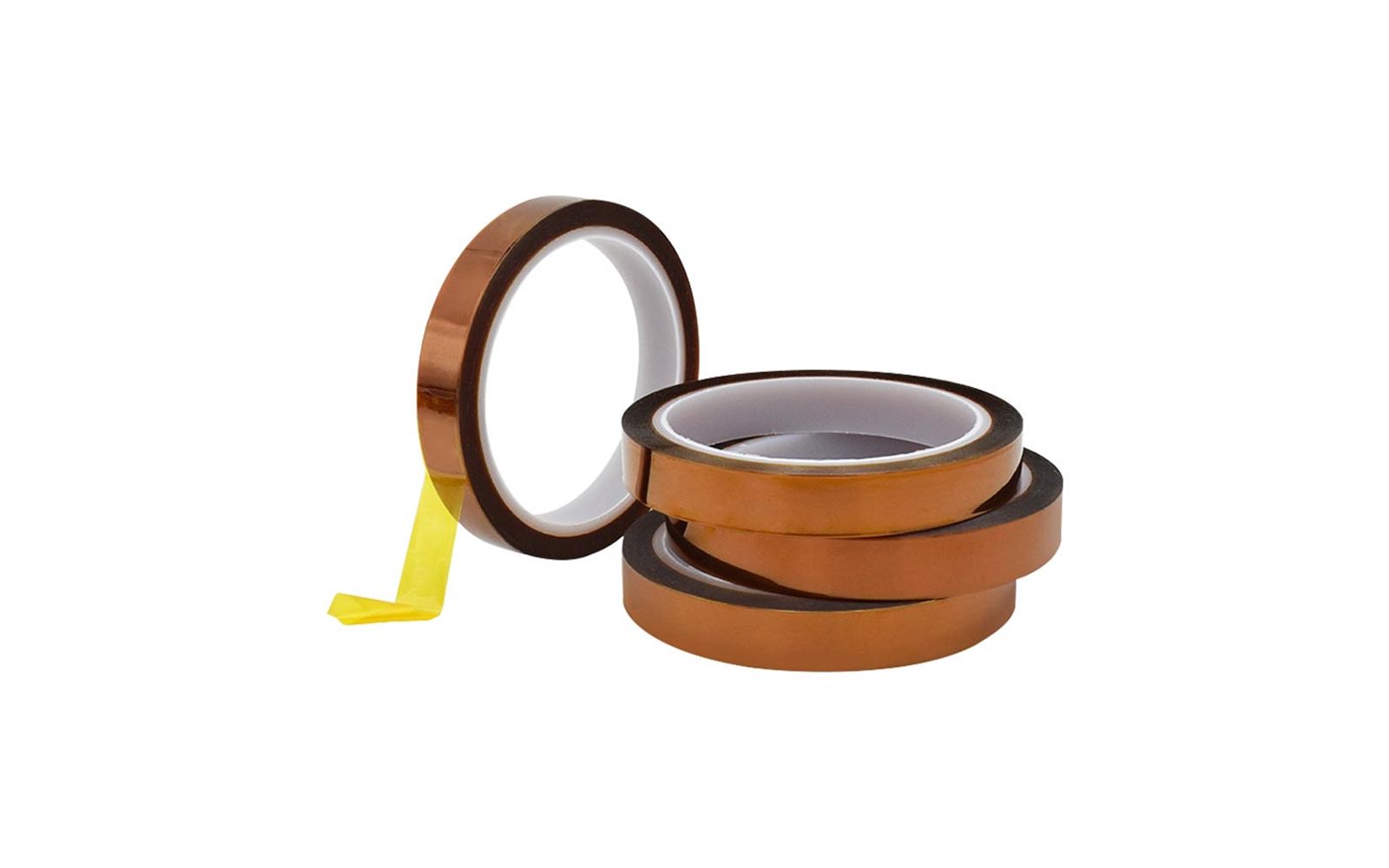
Conductive, polyimide, aluminum foil and thermal tapes for grounding, shielding, insulation and high-temperature protection.
View product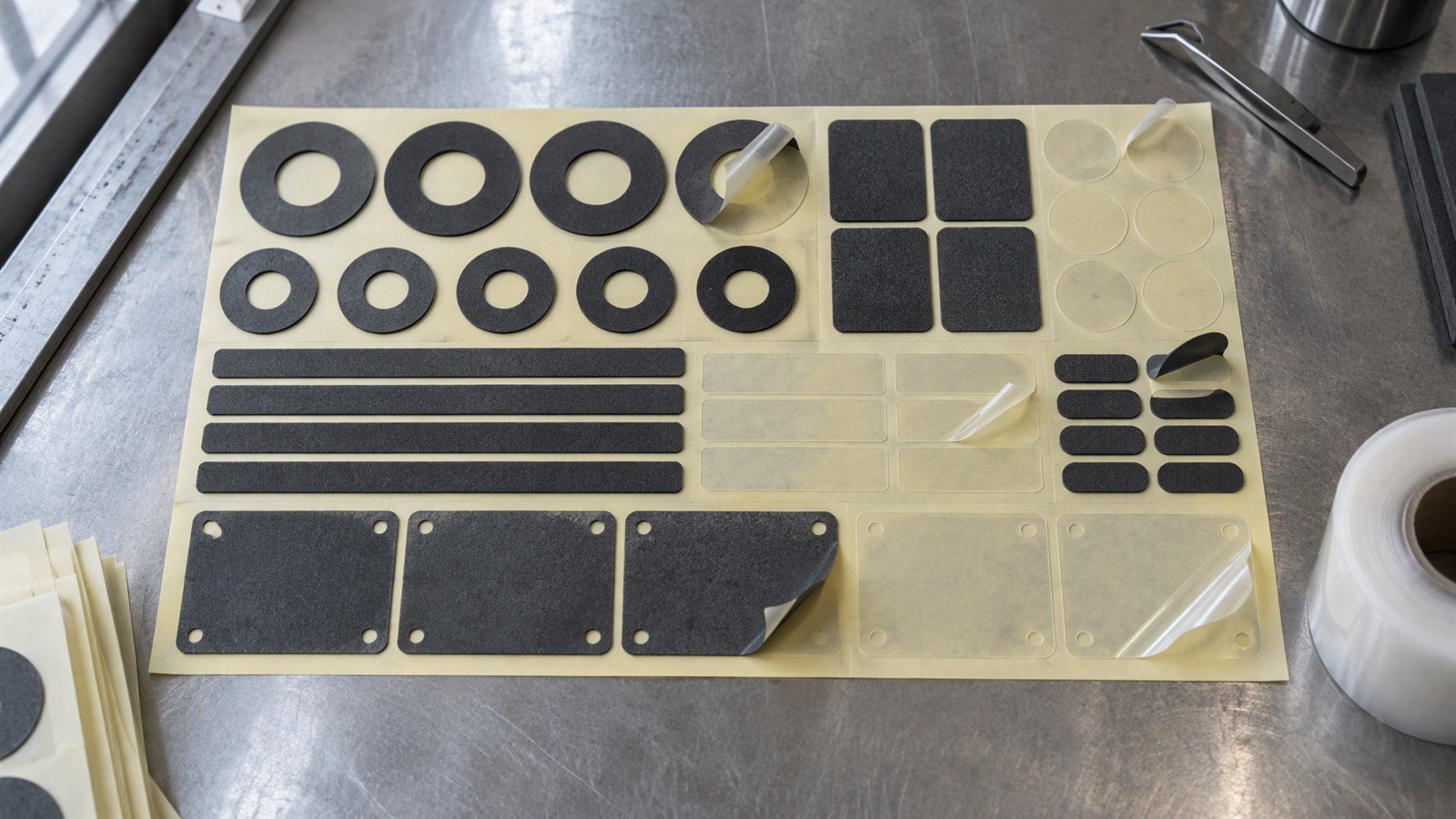
Custom adhesive parts from drawing to ready-to-install: flat-bed, rotary, laser cutting and kitting.
View productThe same film that works on one lamination press fails on another because the window is different. These are the variables that get agreed before a grade is chosen.
| Variable | What it controls | How it is agreed |
|---|---|---|
| Temperature | Whether the film activates fully without damaging the module | Measured at the part, not at the platen |
| Pressure | Contact across the whole card, and whether the coil is crushed | Set against the module and inlay geometry |
| Dwell | Flow and wetting time before the stack cools | Recorded with the press cycle you actually run |
| Build height | Card thickness after lamination and whether it meets the profile | Summed across the layer stack, not the film alone |
| Conduction direction | Conductive in one axis and insulating in the other for ACF | Defined by the contact layout on the module |
| Cool-down under load | Whether the bond sets while the layers still move | Written into the press procedure |
A bench peel value tells you very little about a card programme, because the bond is created inside a lamination cycle and then tested by personalisation, not by a hand pull. A useful trial measures the things the programme will be judged on.
Send your application and target market. We will shortlist grades for heat, humidity and UV before you commit to tooling.