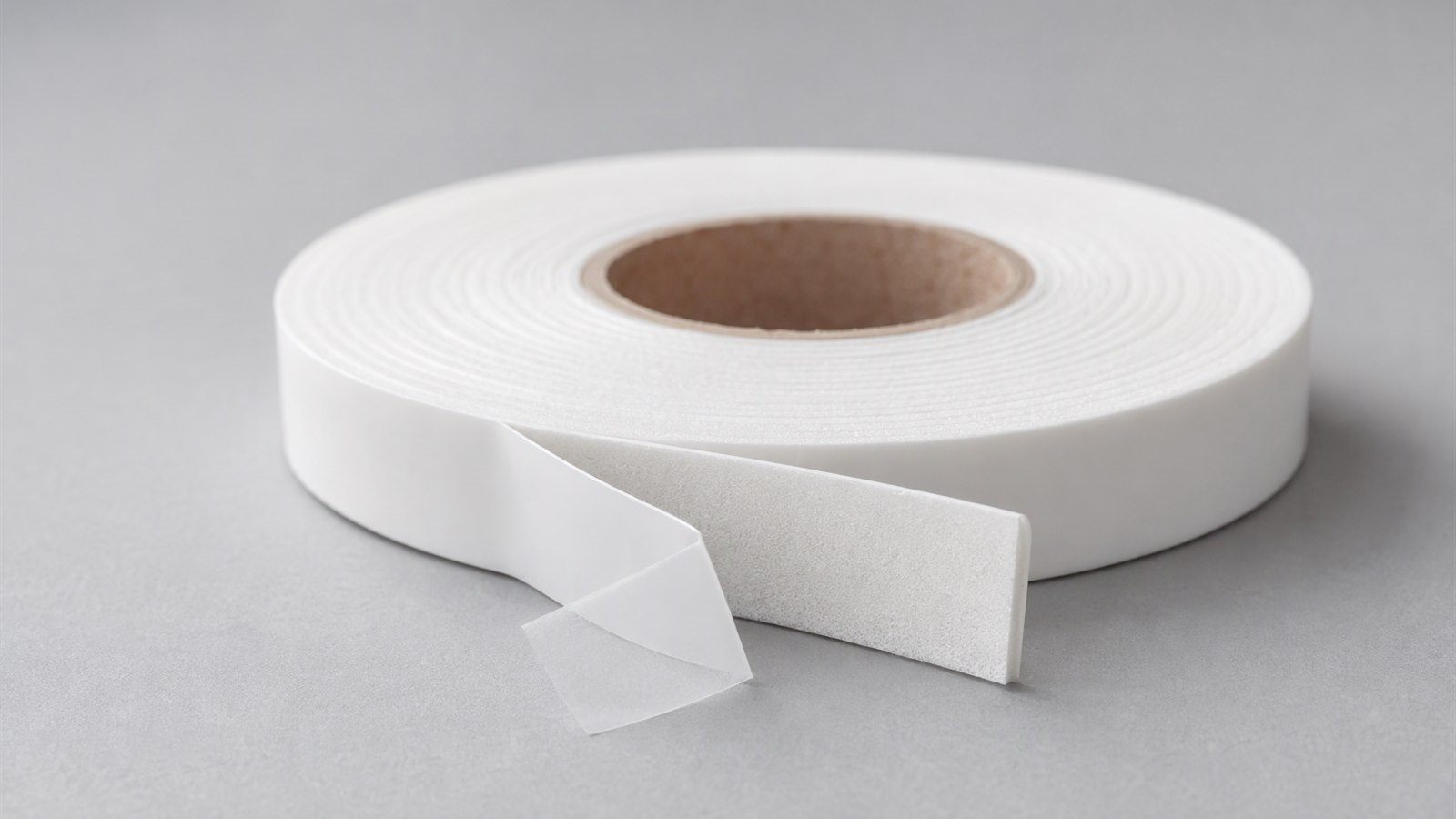
Foam Tape
Acrylic foam, PE foam and VHB-style tapes for exterior trim, panels, glazing and appliance bonding.
View productHeat, humidity and UV attack foam tape from three directions. Here is a test plan and a set of design rules for exterior and semi-exterior bonds in tropical climates.
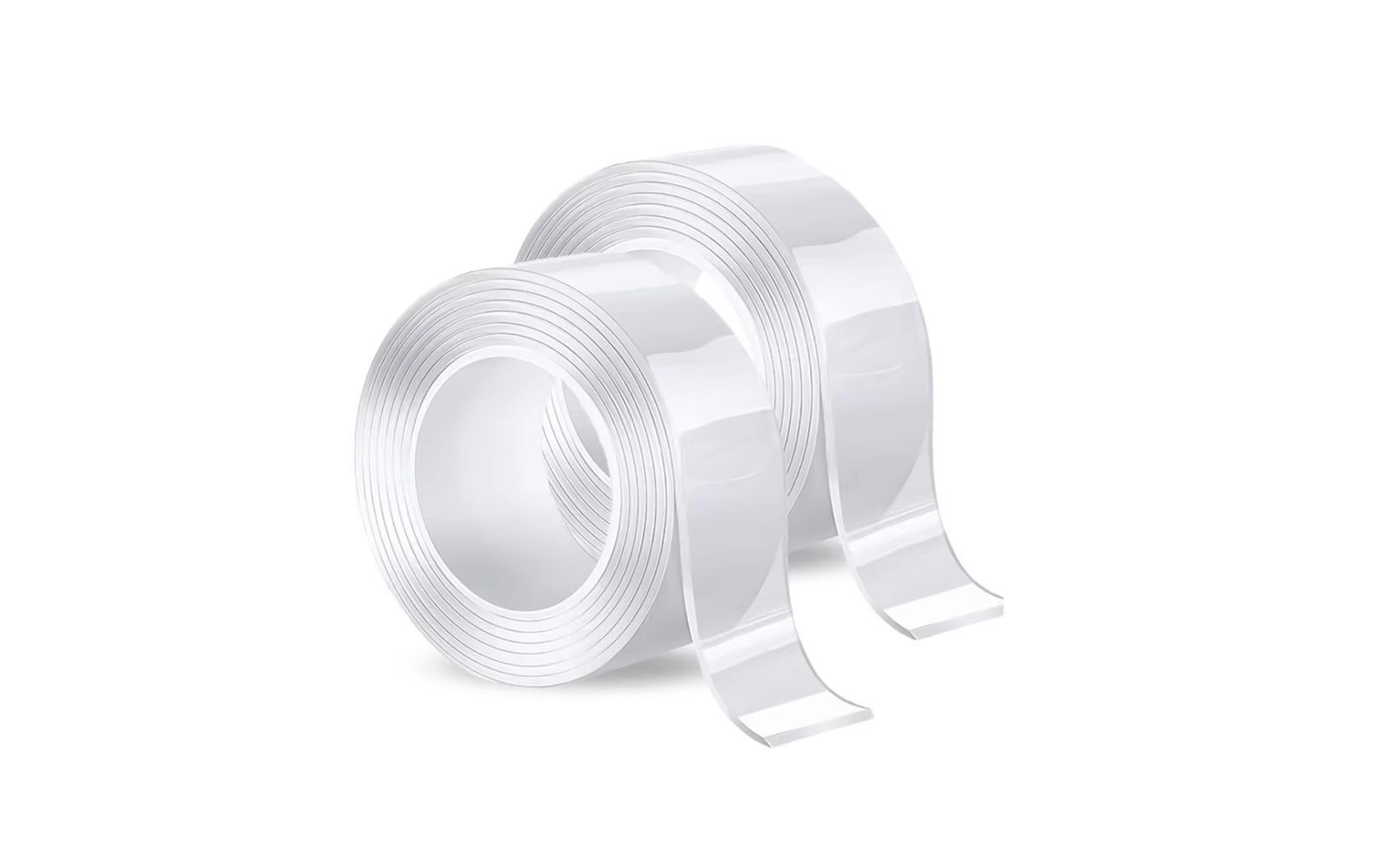
Acrylic foam tape is often specified for exterior trim, glazing and panel bonding because it combines high peel and shear strength with gap filling. In tropical climates, the same tape faces heat, humidity, UV and constant thermal cycling. This guide explains what to test and how to design the joint so the tape keeps its margin.
Acrylic foam tape is a viscoelastic acrylic foam core with a pressure-sensitive adhesive skin. The foam absorbs stress between materials that expand at different rates, while the acrylic chemistry provides strength and aging resistance. VHB is a 3M brand name for a family of these tapes; other manufacturers offer comparable acrylic foam constructions under their own names.
Because the foam is viscoelastic, its behaviour depends on temperature and time. A bond that feels rigid at 23 °C can creep at 80 °C under the same load. That is why tropical validation cannot rely on a single room-temperature peel test.
Heat reduces shear strength and increases creep. A dark exterior panel in direct sun can reach well above ambient air temperature, so the tape may see 70 °C or more even when the forecast is 35 °C.
Humidity attacks the bond interface. Moisture can migrate along an exposed edge, especially on glass and metal, and weaken adhesion over months. UV degrades exposed foam and adhesive edges. A bond that is protected by a frame or overlap behaves very differently from one fully exposed to sun and rain.
The goal is not to reproduce ten years in a week. It is to compare candidate tapes under stresses that rank them in the right order, and to catch joints that fail early.
| Test | Typical condition | What it reveals |
|---|---|---|
| Static shear at temperature | 80 °C, hanging load, 24–168 h | Creep resistance and safe working load |
| Peel after heat aging | 80 °C for 7 days, then peel at 23 °C | Adhesive degradation and loss of tack |
| Humidity aging | 60 °C / 90 % RH for 7–14 days | Edge intrusion and interface weakening |
| Water immersion | 23 °C or 40 °C water, 7 days | Suitability for splashes and condensation |
| Thermal cycling | −20 °C to +80 °C, 50–100 cycles | Stress from differential expansion |
| UV exposure | QUV or xenon arc, 250–500 h | Edge chalking, yellowing and adhesion loss |
| Real-part load test | Suspended or vibrating assembly | Joint design, substrate stiffness and failure mode |
Tape selection sets the ceiling, but joint design decides whether you reach it. These rules apply to exterior trim, signage, glazing and appliance panels.
The most common failures involve low surface energy plastics, powder-coated metal and glass. Glass is interesting because it is high energy and bonds well initially, but moisture can travel along the interface from an exposed edge. A protected edge and a compatible adhesive are more important than a higher peel number.
Powder coatings vary widely. Two panels that look identical can have different surface chemistry. Test the actual production coating, not a bare metal coupon.
| Substrate pair | Risk level | Design note |
|---|---|---|
| Aluminium to aluminium | Low | Good candidate for acrylic foam; watch thermal expansion on long parts |
| Aluminium to glass | Low to medium | Protect edges from standing water; test humidity aging |
| ABS or PC to metal | Medium | Differential expansion is significant; allow the foam to absorb movement |
| Powder-coated steel | Medium to high | Test the coating; use LSE adhesive or primer if needed |
| PP or PE to anything | High | Requires LSE adhesive and substrate-specific validation |
Acrylic foam tape is the stronger, more durable option for exterior and structural bonds. PE foam is softer, cheaper and better at filling large irregular gaps, but it has lower shear strength and shorter outdoor life. Use PE foam for interior mounting, signage and cushioning; use acrylic foam where the bond carries load or faces weather.
PU foam sits between the two and is useful for gap filling and vibration damping where structural strength is not required.
VHB, ACXplus and similar names refer to specific product families, not generic chemistry. A generic acrylic foam tape may match the thickness and peel value of a branded product and still differ in foam density, adhesive skin and aging performance. Cross-reference by construction and test data, not by thickness alone.
If a drawing specifies a branded grade, ask whether an equivalent is acceptable and document the approval. If the application is safety-related or covered by a certification, stay with the approved product unless the change is formally validated.
This guide is general technical information, not a substitute for testing the selected material on your substrate and process. Values are grade dependent; confirm the current TDS before approval.
Acrylic foam, PE foam and VHB-style tapes for exterior trim, panels, glazing and appliance bonding.
View product
PET, non-woven, transfer and tissue tapes for electronics, automotive and appliance assembly.
View product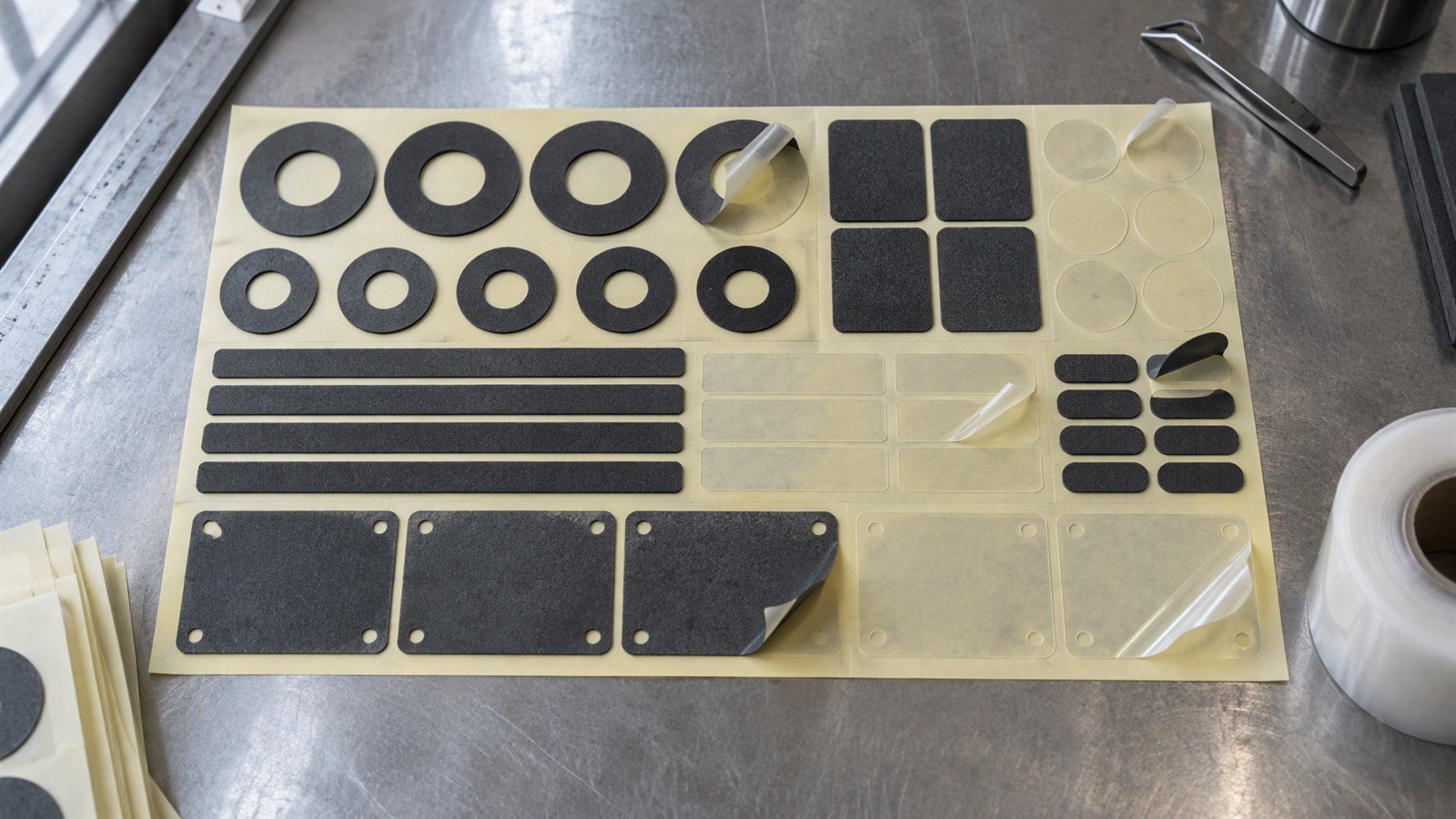
Custom adhesive parts from drawing to ready-to-install: flat-bed, rotary, laser cutting and kitting.
View productSend the substrate, environment and drawing. We will propose a construction and a validation plan.