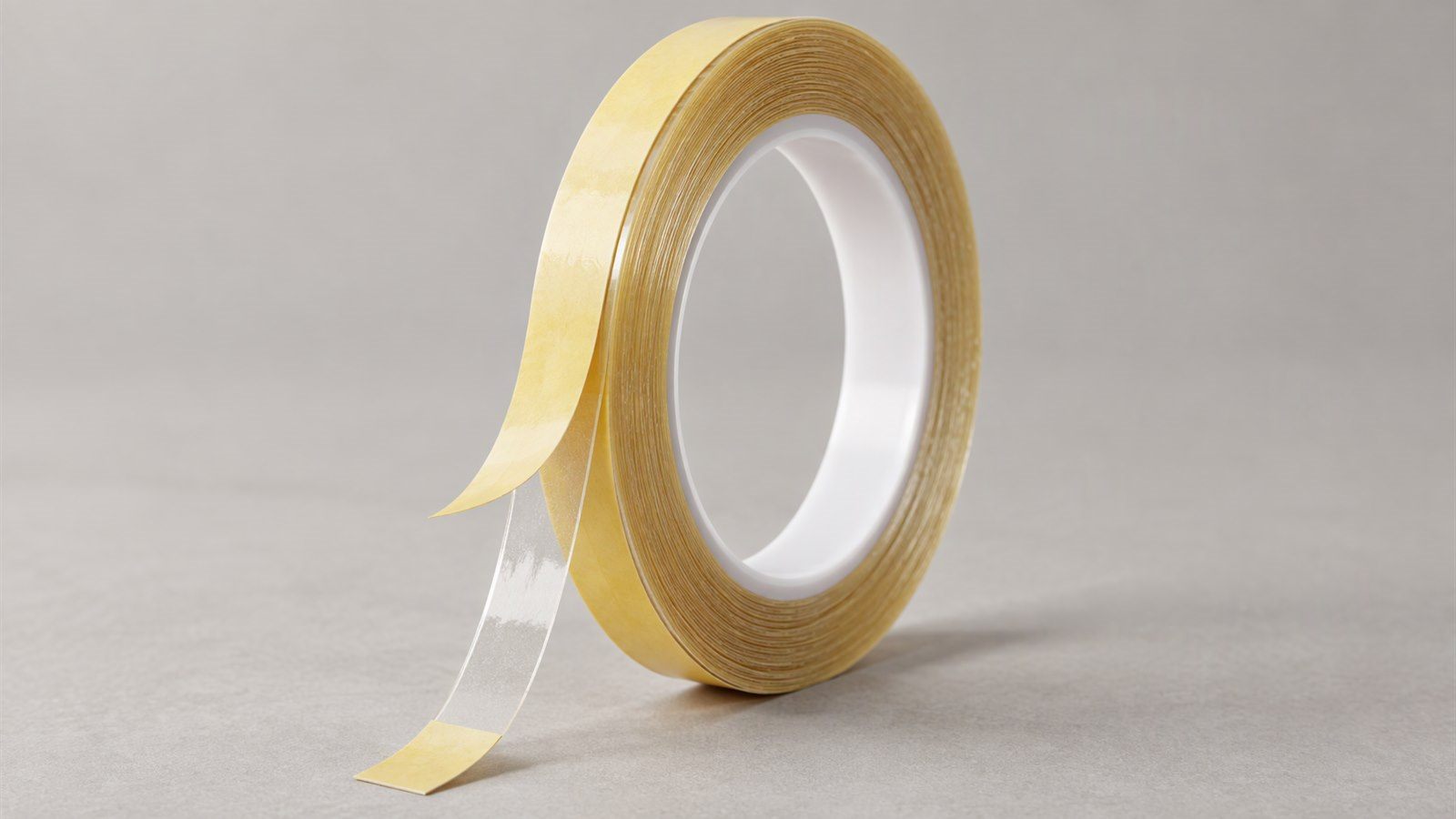
Double-Sided Tape
PET, non-woven, transfer and tissue tapes for electronics, automotive and appliance assembly.
View productPanel and nameplate bonding, oven and HVAC sealing, wire routing and noise damping for refrigerators, washing machines, cookers, dishwashers and office equipment — supplied as rolls or die-cut parts for the assembly line.
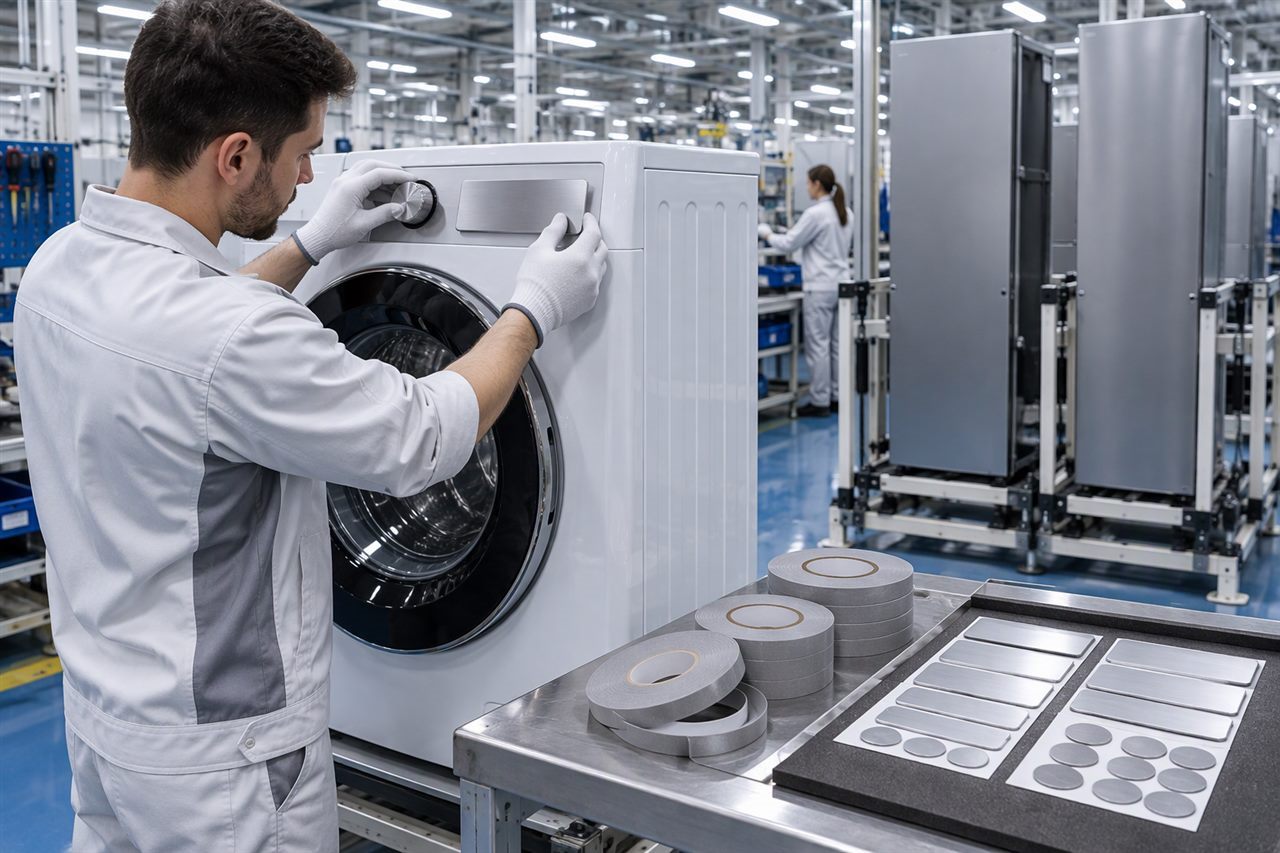
Ovens, dishwashers and laundry machines cycle hot and wet for the whole service life of the product.
Panels, foams and wire looms must stay quiet through the spin cycle and the drying cycle.
Painted steel, stainless, glass, ABS and PP appear in one cabinet, each needing a different surface treatment.
A field technician has to open the assembly again without cracking the panel or leaving residue.
Fixing and labelling has to fit the takt time without an extra cure or press station.
| Application | Typical construction | Why |
|---|---|---|
| Control panels and nameplates | PET double-sided tape / transfer tape | Thin, even bond line on painted steel and plastic |
| Door, side and decorative trim | Acrylic foam tape / VHB-style tape | High initial tack so clips and screws can be dropped |
| Ovens, hobs and dishwashers | High-temperature silicone or acrylic grade | Holds through the bake and steam cycle; grade set per enquiry |
| Refrigerator and freezer cabinets | Aluminum foil tape / PE foam tape | Vapour closure, thermal bridging and insulation |
| Compressor, drip and panel noise | PE foam tape / cloth tape | Damping and rattle reduction on moving parts |
| Wiring, sensors and earth points | Copper foil / conductive tape | Grounding and shielding inside the control bay |
| Traceability and rating labels | Polyester and MOPP label stock | Survives humidity, cleaning agents and the service life |
Starting points only. Confirm the final grade against your substrate, load and validation plan.
Nameplate and bezel bonding on a laundry line
An appliance OEM was riveting a control bezel and a metal rating plate and wanted the fasteners gone without rattles appearing after humidity cycling.
We compared an acrylic foam tape and a PET double-sided tape on the actual painted and moulded panels, supplied die-cut samples with the aperture and screw-hole layout, and agreed the application procedure with the line.
The bezel and plate were qualified on tape, the manual handling at that station went away, and the parts arrived die-cut on a liner ready to place.
PET, non-woven, transfer and tissue tapes for electronics, automotive and appliance assembly.
View product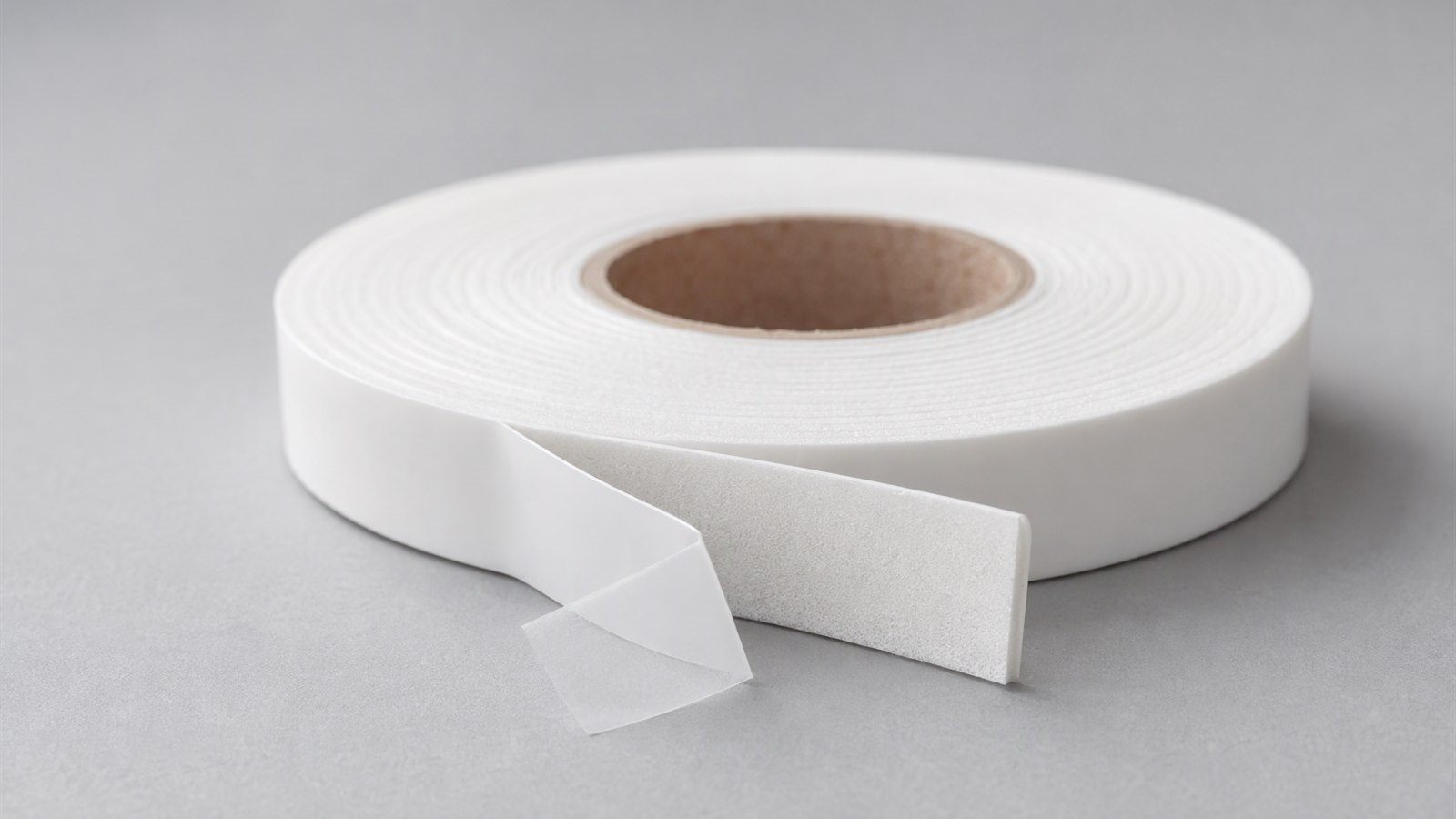
Acrylic foam, PE foam and VHB-style tapes for exterior trim, panels, glazing and appliance bonding.
View product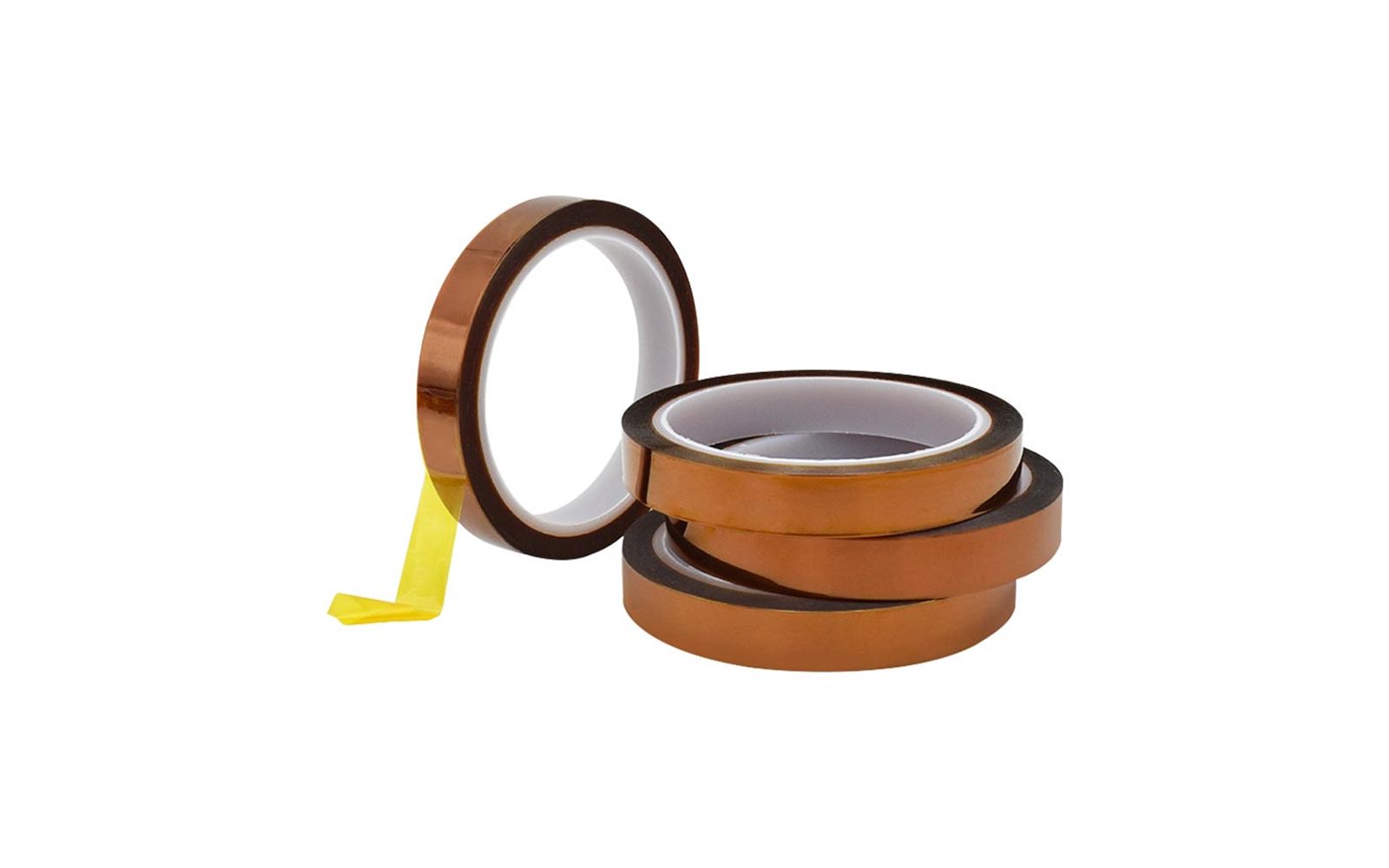
Conductive, polyimide, aluminum foil and thermal tapes for grounding, shielding, insulation and high-temperature protection.
View productAn appliance cabinet is a small building: hot zones, wet zones, moving parts and a technician who has to open it again years later. These are the items that move the recommendation.
| Decision | What it changes | What to state with the enquiry |
|---|---|---|
| Peak surface temperature | Whether the adhesive softens, creeps or cures harder over the service life | The hottest point the tape touches and how long it sits there |
| Substrate and coating | Powder coat, primer, stainless and moulded plastic behave differently from the same datasheet | The actual panel and its coating, not the material family |
| Removal in service | A bond that must last ten years and still open at a workshop is a different construction | Whether a field technician has to take the part off |
| Noise and rattle | Foam thickness and compression decide whether a panel sings on the spin cycle | The cycle the product runs and the mass it carries |
| Gap and flatness | Tape needs contact; a warped or ribbed panel needs a softer, thicker construction | Measured gap and the tolerance around it |
| Handling at the station | Liner format, release force and part orientation decide whether it is placed in one move | Manual placement or a robot, and the pick-up method |
Almost every appliance complaint arrives as "the tape came off". In practice there are two different failures behind that sentence, and they have different fixes. Separating them before we sample usually saves a full qualification round.
Send your application and target market. We will shortlist grades for heat, humidity and UV before you commit to tooling.