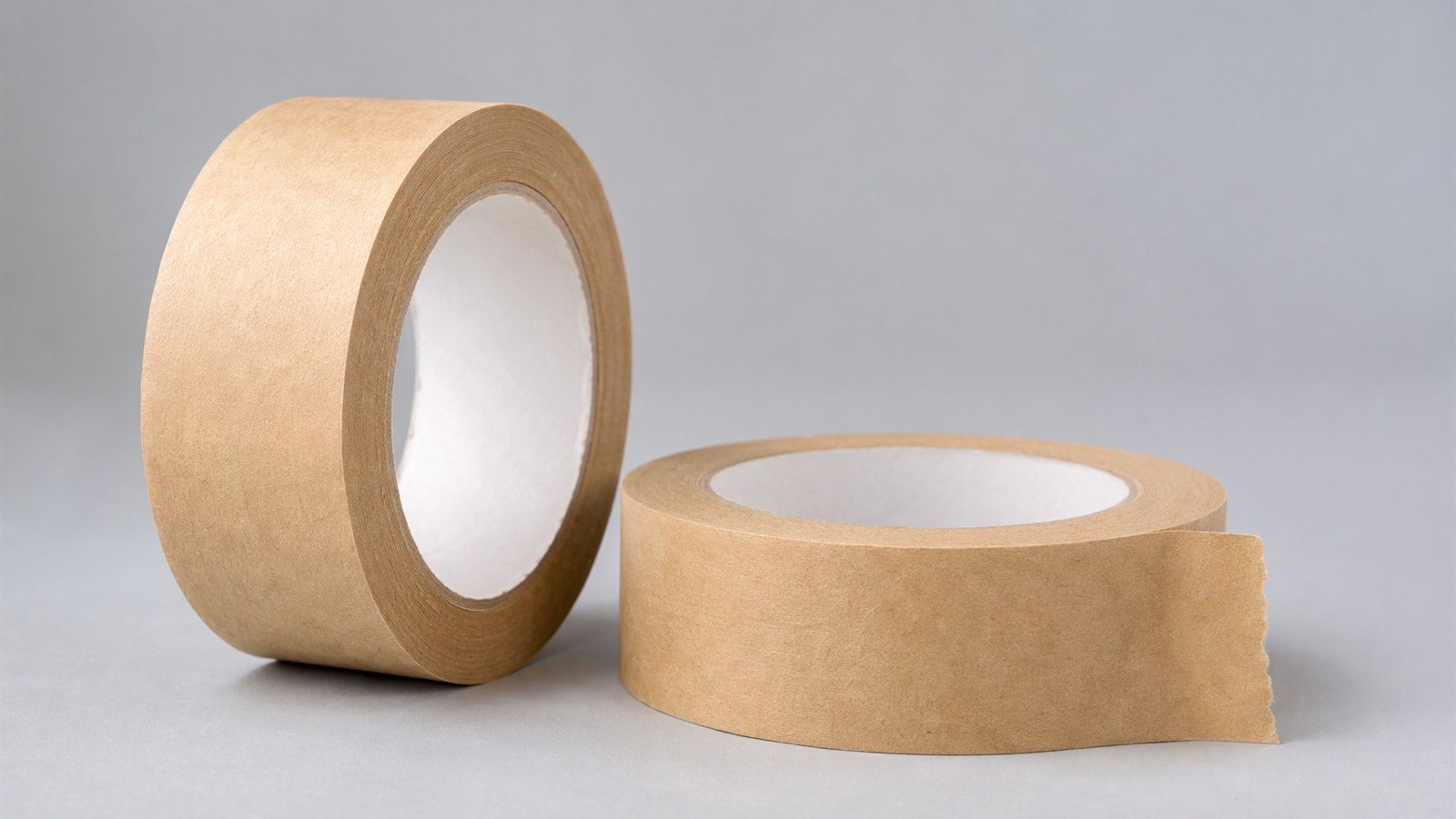
Masking & Packaging Tape
Masking, cloth, duct and MOPP tapes for painting, protection, bundling and carton sealing.
View productCore starting, coil and strip splicing, end tabbing, edge and surface protection, bundling and load securing for steel and aluminium mills, slitting lines, service centres and fabricators.
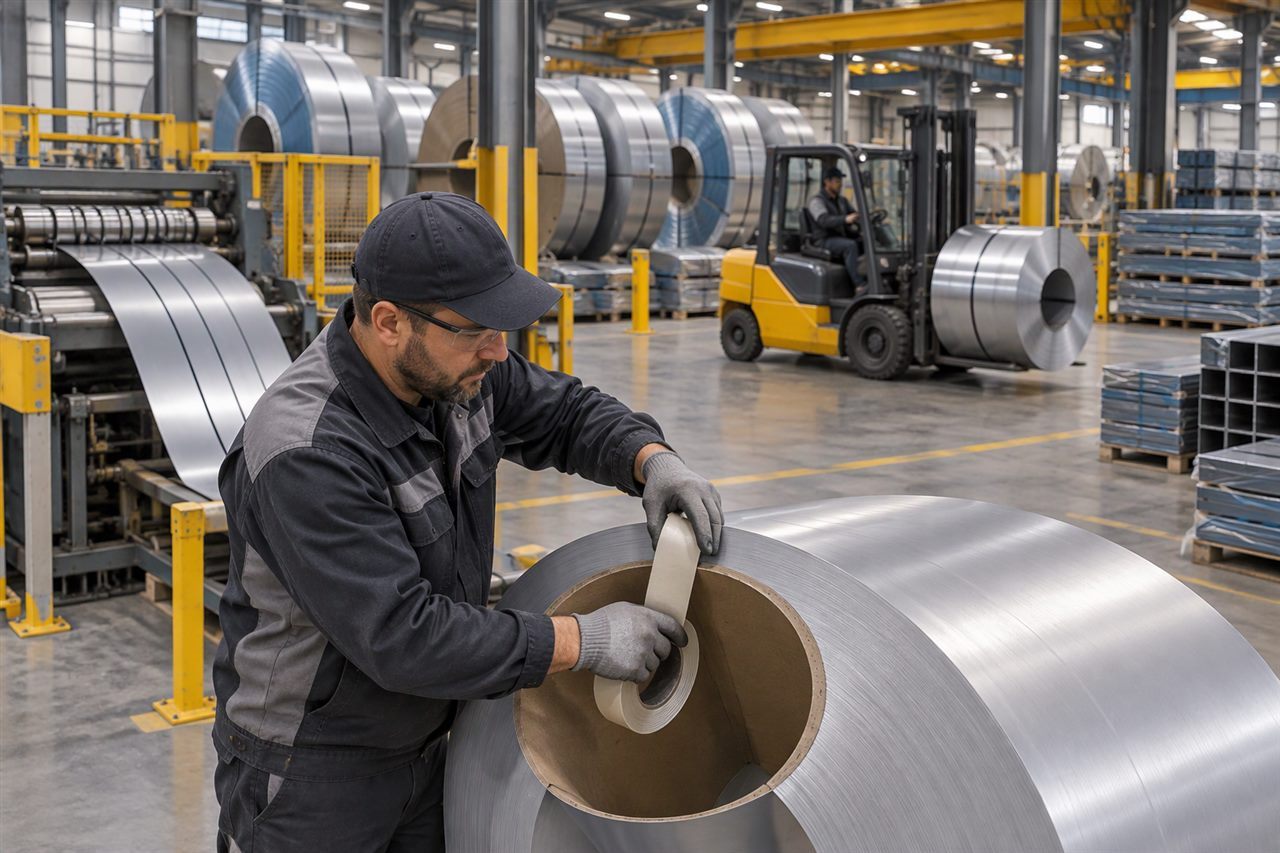
The first metres of a coil decide whether the run holds tension or stops the line.
Metal surfaces are oily, burr-edged and sometimes warm when the tape goes on.
A scratched sheet, or protection that leaves residue, is rejected downstream rather than reworked.
Edges and corners take the hits in a container, on a flatbed and in the yard.
Coils and cut parts sit outdoors between the mill and the workshop.
| Application | Typical construction | Why |
|---|---|---|
| Coil core starting | Heavy-duty high-tack tape | Holds the strip onto the core from the first metre |
| Coil and strip splicing | PET and cloth splicing tape | The join survives acceleration and tension |
| Reel end tabbing | End tab and strapping tape | Stops the strip unfurling in storage |
| Edge and corner protection | Protective tape and extruded profiles | Keeps edges from denting and cutting |
| Sheet and profile surfaces | PE and PVC protective film | Clean removal after fabrication |
| Bundling and load securing | Cloth and duct tape | Holds in yard and truck conditions |
| Weld, paint and machining masks | Masking tape | Clean removal from metal surfaces |
Starting points only. Confirm the final grade against your substrate, load and validation plan.
Core starting and end tabbing on a slitting line
A service centre was losing tension at coil start and finding strips unfurling at the end of the run, and both stopped the line.
We tested core starting and end tab tapes against the coating oils, strip thickness and line speed actually in use, then agreed the application procedure with the operators.
Coil starts held and the tabs survived storage and loading, and the tape became a line checklist item instead of a consumable someone grabbed from the shelf.
Masking, cloth, duct and MOPP tapes for painting, protection, bundling and carton sealing.
View product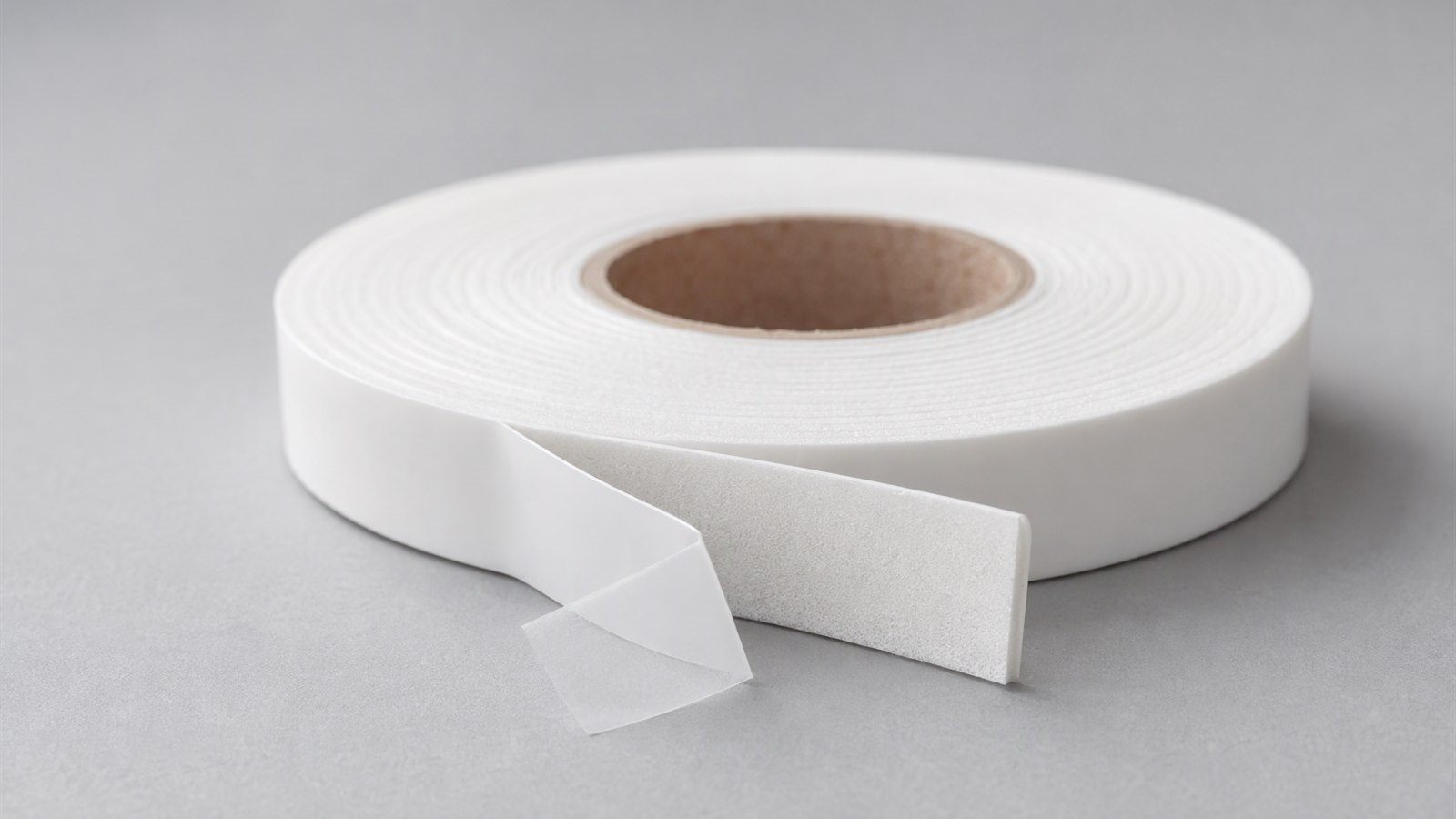
Acrylic foam, PE foam and VHB-style tapes for exterior trim, panels, glazing and appliance bonding.
View product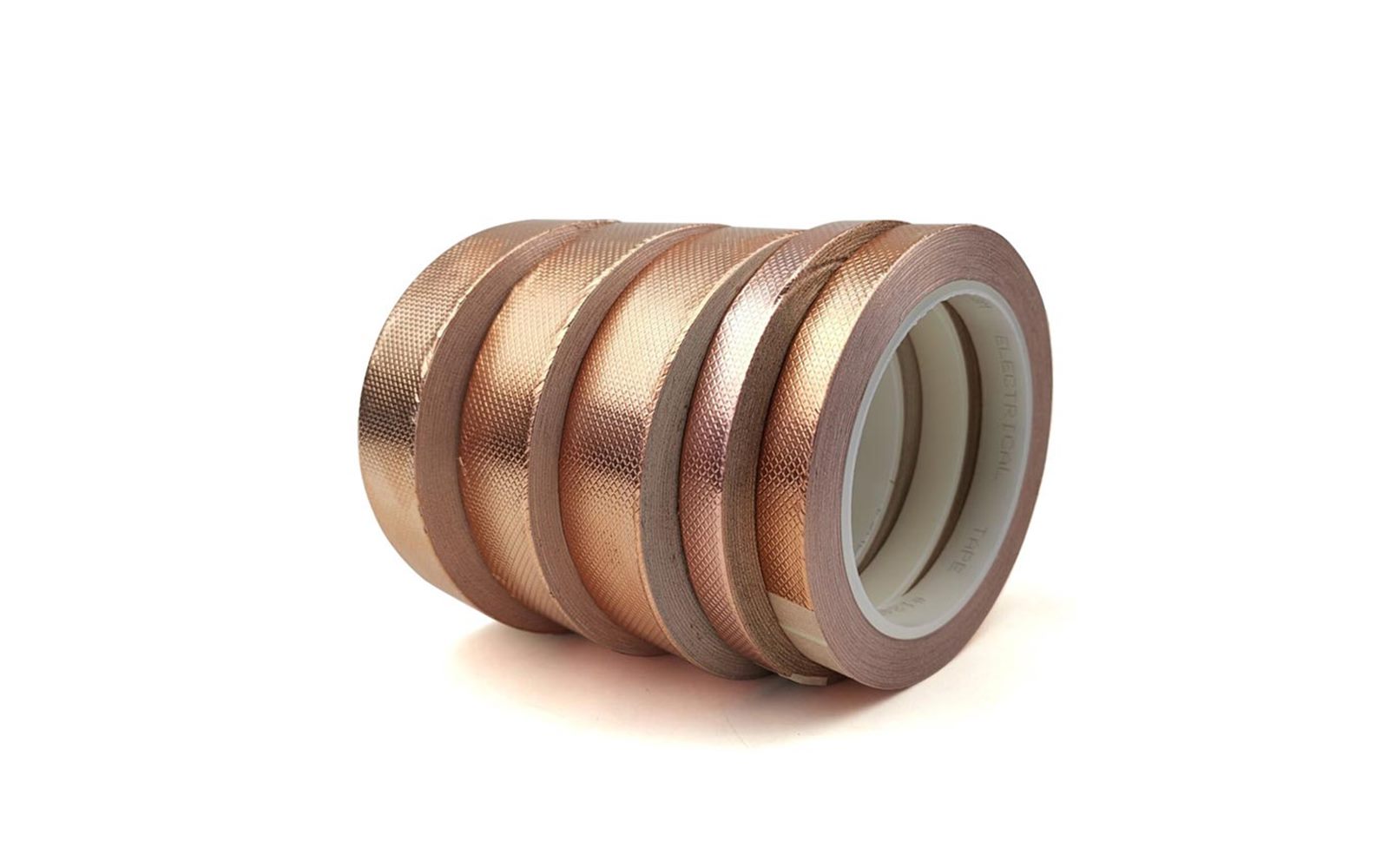
Easy-release, heat-reactive, low-VOC, medical IVD and laser-through glass tapes for demanding applications.
View productMetal is the surface people trust most and specify least. These are the failures we get asked about, and what each one actually points at.
| Symptom | What it usually points at | What fixes it |
|---|---|---|
| Strip releases at coil start | Surface oil, core tension or a tape whose grab depends on a clean surface | A high-tack grade matched to the coating oil, plus the application procedure |
| Residue after fabrication | The removal window was exceeded, or the film sat in sun and heat | A grade specified by its removal window, not by its initial stick |
| Edge cut-through | A burr or a corner the tape was never meant to carry | A thicker backing or a protective profile at that edge |
| Film lifts at a bend or draw | Extension at the radius that the backing cannot follow | A conformable backing, or film applied before forming |
| Splice breaks in the line | Join method, or a splice angle the line speed does not allow | Backing and splice technique matched to speed and tension |
| Yard weathering | Ultraviolet and rain for weeks, on a tape chosen for the shop floor | An outdoor-rated protection and a stated exposure limit |
A protective film is a promise with a time limit: it holds until a stated exposure, then it stops being removable cleanly. The failures we see are almost always a film that was specified as a material and used as a permanent feature.
Send your application and target market. We will shortlist grades for heat, humidity and UV before you commit to tooling.