Sekisui Tapes and Materials
Sekisui tapes and materials supplied through qualified channels, with application review, converting and clear availability statements.
Our position
We supply Sekisui tapes and materials through qualified channels. We do not claim to be an authorized distributor for every Sekisui product line in every region. Availability is confirmed at quotation.
Sekisui materials are often specified for electronics and specialty applications. We review the requested grade against the substrate, process and documentation requirement before quoting.
Material documentation is provided for the supplied batch where available. For tenders and regulated projects, confirm the exact grade and the documents required before approval.
Material families
| Family | Typical use |
|---|---|
| Double-sided tapes | Electronics, display and general assembly |
| Foam tapes | Panel, trim and gap-filling bonds |
| Masking tapes | Processing and protection |
| Specialty tapes | Electronics and harsh environments |
How we source
We compare the requested Sekisui grade with the application and available supply. If the exact grade is not available, we propose a qualified alternative and explain the difference.
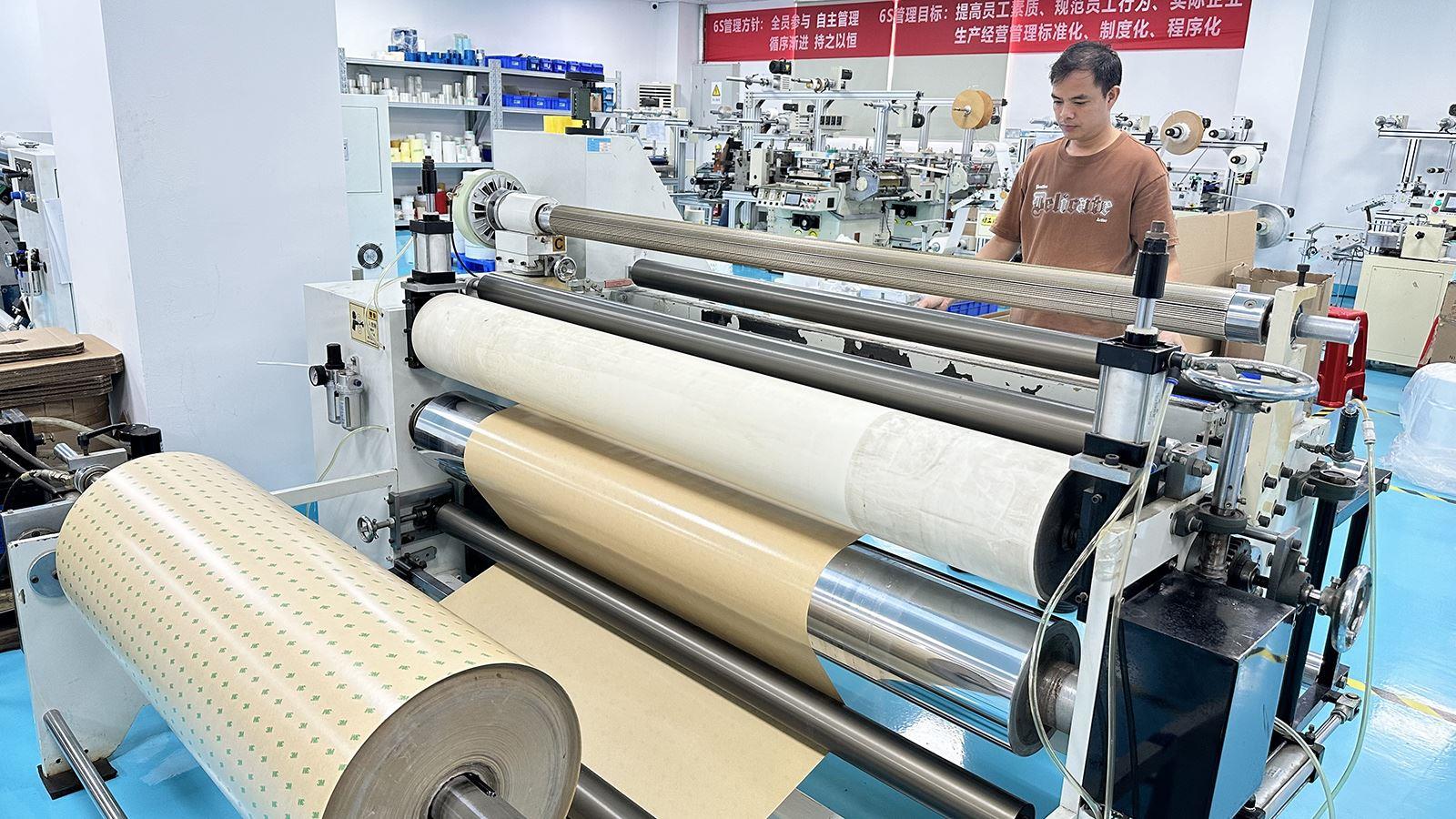
Conversion is carried out in our Shenzhen plant when a slit roll, laminate or die-cut part is required. The quotation identifies the supplied material and the converting step.
What to verify
- The quotation states the brand, grade and construction.
- The batch label and delivery documents match the quoted material.
- The documents supplied apply to the exact grade, not only the product family.
- Any substitution is identified before production.
- For regulated projects, approval is tied to the supplied grade and batch.
FAQ
Are you an authorized Sekisui distributor?
Can you die-cut Sekisui material?
Can you compare Sekisui with tesa or 3M?
What a Sekisui grade is usually specified for
Sekisui material tends to arrive on an enquiry as a part number already written into a drawing. This is what we then have to settle before it becomes an order.
| Typical request | The question that decides the answer | What we confirm at quotation |
|---|---|---|
| A double-sided grade for display or bezel bonding | Whether the bond is over a foam step, a thin film or direct to the housing | The grade, its thickness range and the peel behaviour on your substrate |
| A foam tape for gap filling and trim | How much movement and compression the joint has to absorb over temperature | The core, the adhesive system and the compression set behaviour we can evidence |
| A masking grade for a process step | How long it stays on and what it must not leave behind | Removal window, residue behaviour and the edge quality after the cut |
| A specialty grade for harsh conditions | Which of heat, chemical or UV exposure is the real constraint | Whether the requested grade is the right one or a different family fits better |
| A die-cut part in a Sekisui material | Whether the carrier, adhesive and liner take the cut route without flowing | The achievable tolerance, the tooling type and the presentation to the line |
Before a grade number goes onto your drawing
- Check the number against the construction rather than the family name, since a family spans several adhesive systems
- Confirm the destination market, because availability and channel scope are not the same everywhere
- Ask which documents exist for that exact grade before the drawing is frozen, not after
- Test on your own substrate with your own cleaning and dwell, then record the failure mode
- Agree now what happens if the grade is restricted or superseded, so a substitution is an approval rather than a surprise
- Say whether you are buying material, conversion or both; the two have different lead-time shapes
Sekisui sourcing questions
Which Sekisui families do you hold?
Can you supply original material in converted sizes?
Is a Sekisui grade and its equivalent really interchangeable?
Do you support a change if the grade is discontinued?
Need a specific grade?
Tell us the brand, grade and market. We will confirm what is available and what documentation comes with it.